History · Purwokerto
Four Centuries
of Heritage
Banyumas
From the Pajang Sultanate's mandate to a modern education city — a long journey still felt in every corner of Purwokerto today.
Begin the Journey ↓Origins & Meaning
Purwokerto: A City of Prosperity
The name Purwokerto derives from two Old Javanese words: Purwa (east / beginning) and Kerta (prosperous / peaceful). Literally: "the prosperous land in the east" — a name that reflects the aspirations of its founders.
The city did not arise in isolation. It grew from the fertile Banyumas region, shaped by spice trade routes, agrarian communities, and shifting centers of power in Central Java.
Its ties to the Mataram Sultanate and the political legacy of Banyumas forged the city's distinctive character: grounded, open, and confident in its own cultural voice.
Purwa
East / Beginning
Kerta
Prosperous / Peaceful
Banyumas
Regional Core
Ngapak
Voice of Identity
1816 – 1942
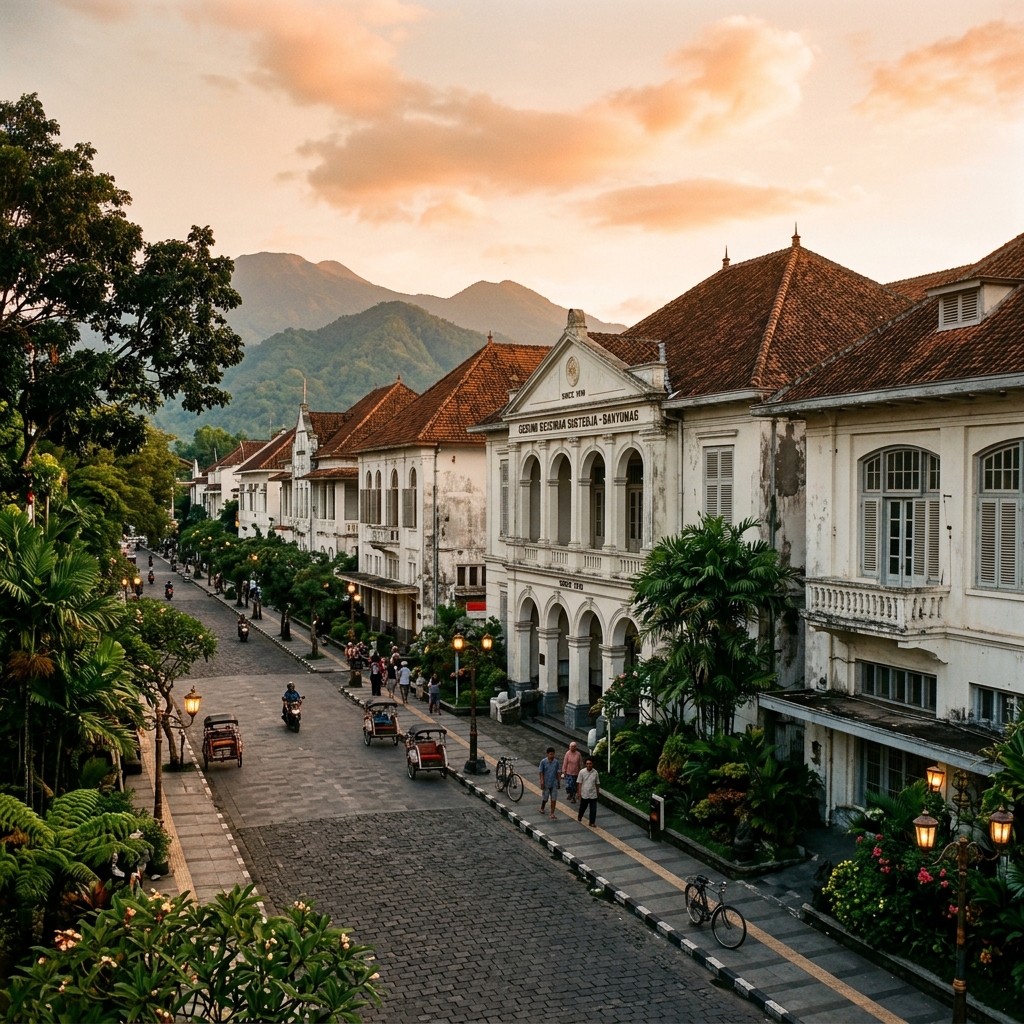
The Colonial Legacy That Shaped the City
During the Dutch colonial era, Purwokerto underwent major transformation. Road infrastructure and railway lines were built to support the distribution of agricultural produce from Central Java's interior to northern ports.
Buildings in the "Indische" style — a fusion of European architecture with tropical elements — still stand today as silent witnesses to that era.
"Colonial infrastructure shaped the cityscape we see today."
Chronology
Historical Timeline
Founding of Banyumas
Raden Joko Kahiman (Adipati Mrapat) founded Banyumas Regency under mandate from the Pajang Sultanate, laying the political foundation of the region.
Mataram Islamic Era
Banyumas became part of the Mataram Islamic Sultanate. Javanese-Islamic cultural influence took deep root in local traditions, language, and governance.
Colonial Administration
The Dutch strengthened their administrative grip. Purwokerto grew as a distribution hub for agricultural produce, with roads and railways connecting the interior.
Residency Capital
Purwokerto was designated as the capital of the Banyumas Residency, cementing its position as the economic and administrative center of the region.
Indonesian Independence
The people of Banyumas actively participated in the independence struggle. The city became an important base of resistance in Central Java.
Integration & Development
Purwokerto grew as an education center. New institutions were established, laying the foundation of its identity as a "University City".
Modern Purwokerto
A dynamic city: a hub for education, tourism, and creative economy — while preserving the spirit of its Banyumasan roots.
Figures & Events
Those Who Shaped History
Adipati Mrapat · Founder of Banyumas
Raden Joko Kahiman
The first regent of Banyumas, who founded the regency in 1582 under mandate from the Pajang Sultanate. His leadership laid the foundation for the region's identity.
Independence Fighters · 1945
People of Banyumas
The people of Purwokerto and surrounding areas actively resisted colonial rule. The city became an important base for the independence movement in Central Java.
Founders of the University City · 1950s
Education Pioneers
Visionaries who established educational institutions after independence, transforming Purwokerto into a nationally recognized center of learning.
Cultural Heritage
History that Still Breathes
Purwokerto's history isn't confined to dates and names. It lives in the blunt Ngapak dialect, in the mystical Ebeg dance, in standing colonial architecture, and in the egalitarian social character of its people.
Each generation of Purwokerto inherits and carries forward the Banyumasan spirit — an identity stronger than any administrative boundary.
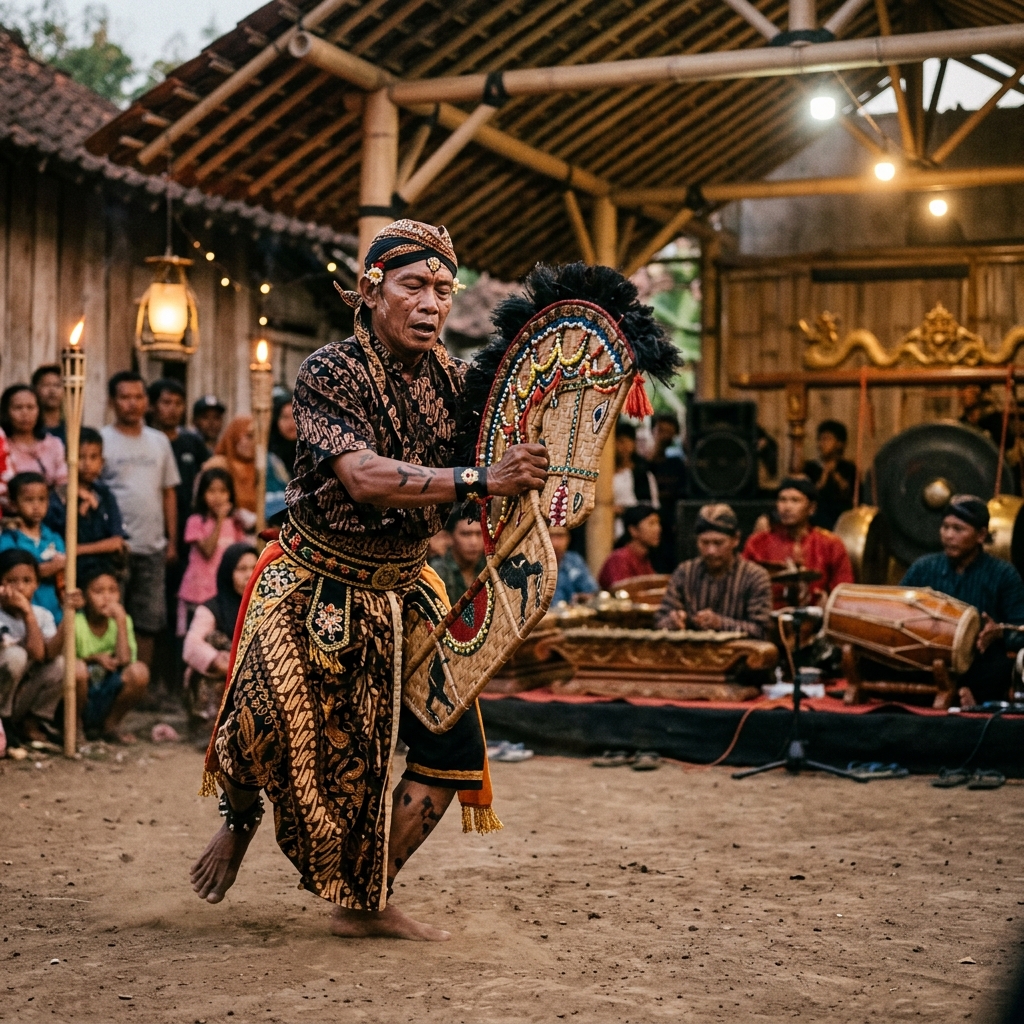
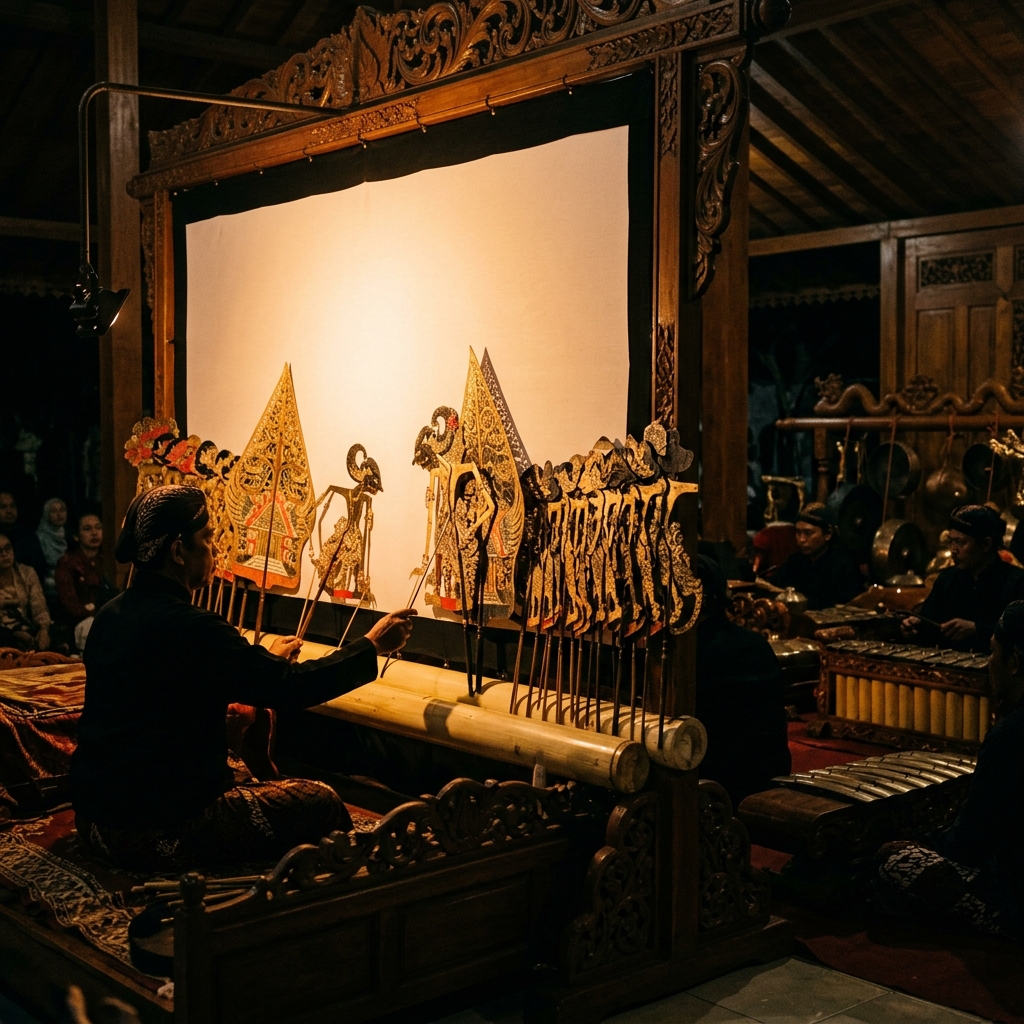
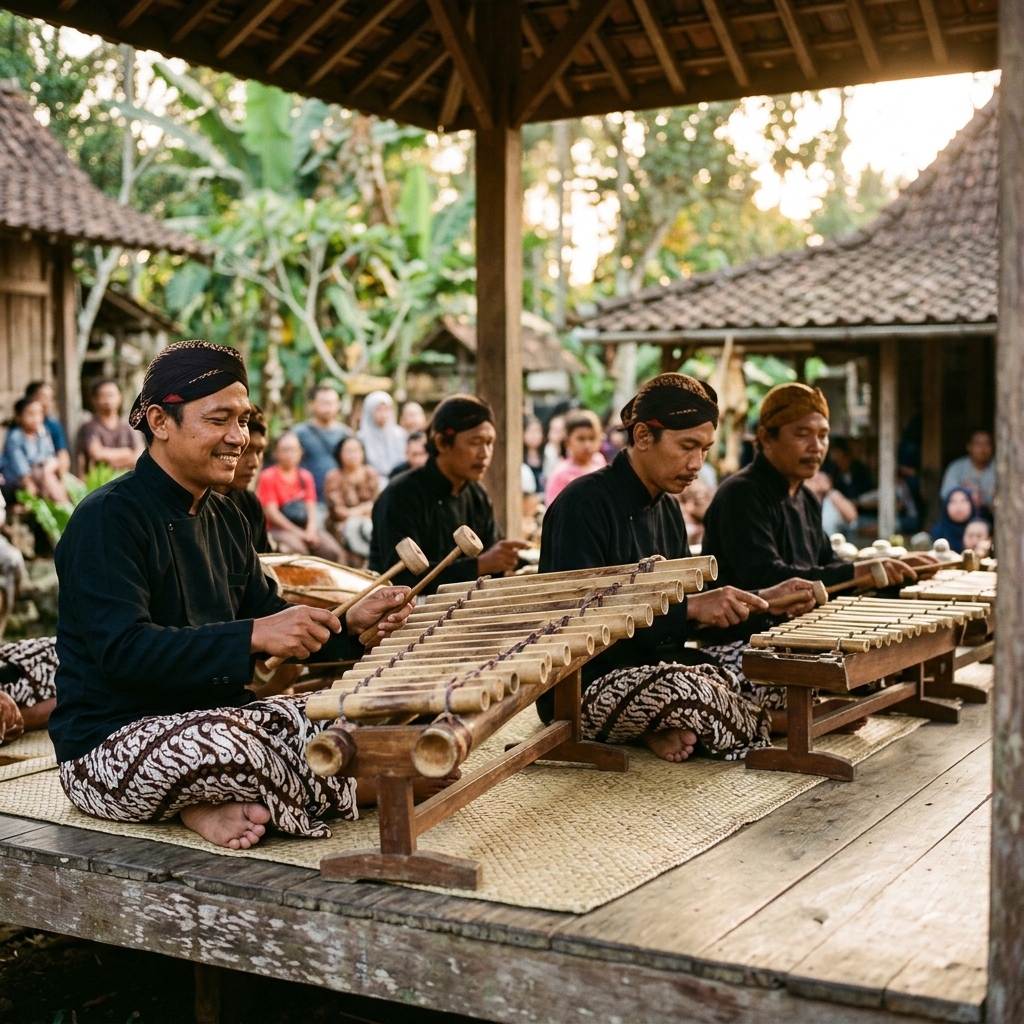
"Purwokerto feels historical not because it is frozen in time, but because its past still organizes the present."
ExplorePurwokerto — A City Living Within Its History